
The History Behind Coral Gables’ Country Club Historic District
Coral Gables is known for its distinctive architecture, tree-lined streets, and carefully planned neighborhoods, but few areas reflect the city’s early vision as clearly as the Country Club of Coral Gables Historic District.
Centered around the Country Club of Coral Gables and the Granada Golf Course, the district also includes dozens of residences lining North and South Greenway Drives. Together, these landmarks tell the story of Coral Gables’ earliest development and the ambition behind the creation of the city.
A Centerpiece of Early Coral Gables
The Country Club of Coral Gables was built in 1922 at the corner of Granada Boulevard and North Greenway Drive. From the beginning, it played an important role in the emerging community. The club was used to entertain prospective buyers and introduce visitors to the lifestyle envisioned for the growing Coral Gables development.
Just next door, the Granada Golf Course became the city’s first golf course when it opened on January 1, 1923. Originally known as the Coral Gables Golf Course, the nine-hole course was designed by the Chicago firm of Langford and Moreau, among the leading golf course architects in the country at the time.
Nearly a century later, the course remains one of the defining open spaces in Coral Gables and an important part of the surrounding neighborhood’s character.
Architecture Along the Greenways
The homes built overlooking the Granada Golf Course were intended to be among the finest residences in the young city.
Many were designed by architects who helped establish Coral Gables’ architectural identity, including H. George Fink, Kiehnel and Elliott, Phineas Paist, Walter DeGarmo, Robert Fitch Smith, and John and Coulton Skinner.
Their work largely reflected the Mediterranean Revival style selected as the architectural theme for early Coral Gables. Stucco walls, arched openings, tile roofs, courtyards, detailed masonry, and European influences helped create the visual identity that still distinguishes the city today.
Because so many significant homes remain concentrated along North and South Greenway Drives, the neighborhood offers an unusually cohesive look at the architecture of Coral Gables during its formative years.
A Neighborhood Shaped by Its Residents
The significance of the district extends beyond its buildings.
Many of the original residents of the Greenway homes played influential roles in the growth of Coral Gables and the broader Miami area. Collectively, they represented fields including finance, medicine, politics, real estate, and commerce.
The neighborhood therefore became connected not only to the physical development of Coral Gables, but also to the people and institutions that helped shape the city socially and economically.
Why the Area Became a Historic District
The Country Club of Coral Gables Historic District was nominated to the Coral Gables Register of Historic Places because of three interconnected qualities: its role in the city’s early history, its significant architecture, and its association with individuals who made meaningful contributions to the community.
Its boundaries were also deliberately chosen. The area contains a particularly dense collection of historic properties tied to the Country Club and Granada Golf Course, with Coral Way forming a major boundary to the east and Alhambra Circle helping define the district to the west.
The result is a historic neighborhood that remains remarkably easy to recognize today.
A Living Piece of Coral Gables History
What makes the Country Club Historic District particularly special is that its history remains woven into everyday life.
The Granada Golf Course continues to provide sweeping green views through the neighborhood, while historic residences line the surrounding streets beneath Coral Gables’ mature tree canopy. The relationship between architecture, landscape, recreation, and residential life that helped define the area in the 1920s is still visible today.
For anyone interested in understanding why Coral Gables looks and feels the way it does, the Country Club Historic District provides an ideal place to start. It is more than a collection of beautiful homes—it is one of the clearest surviving expressions of the original vision for “The City Beautiful.”
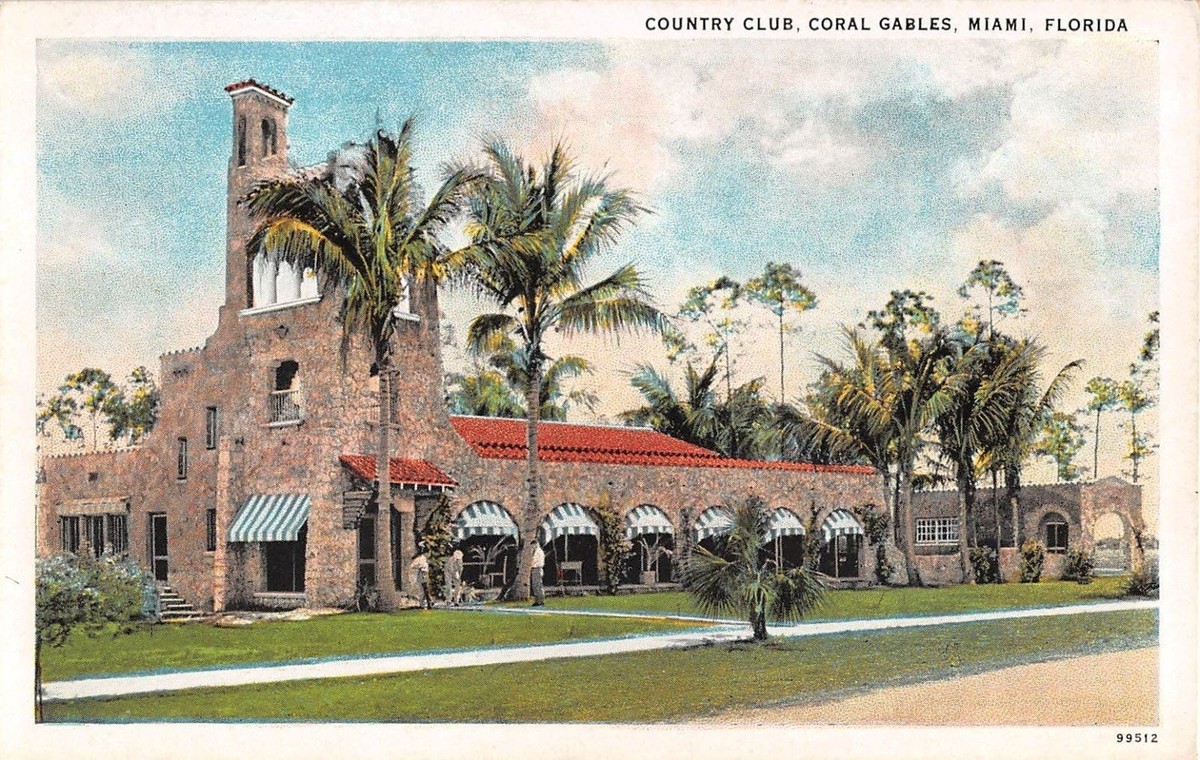
*Sourced from The City of Coral Gables Planning Department Historic Preservation Board